he city of Galle is considered to be the capital city of the southern part of Sri Lanka. Furthermore, the present district of Galle was been formed from the part of the ancient kingdom Ruhuna. The district boundary covered 1635 sq.km and a human density of 1.03 million people.
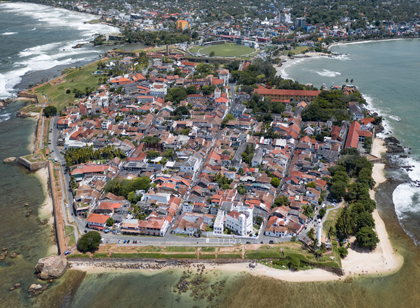
The city of Galle is being much more famous because of the lavish beach strip and the living colonial historical city of Galle Dutch fort city. Gall fort is announced world heritage site by UNESCO in 1988. This magnificent center contains shows off the flair of building and construction methodologies in the Dutch period. Also, Galle is one that has a number of impressive heritage elements and an old living city.
The Galle natural harbor gained the prominence of this location because of its importance as an international trading center during the Portuguese colonial period. Galle ancient harbor is frequented by merchants from both east and west. But there is some evidence that has been found about the Galle and Galle harbor as well as in the pre-colonial period. Therefore the history of Galle is history of Galle harbor too.
One interesting fact that found in the Bible is controversial. According to the Bible, King Solomon has collected monkeys, peacocks, and ivories from an Asian trading center named “TARGUISH”. A British administrator and historian Sir Emerson Tenant was been sain in 1859, the Galle harbor is one prominent ancient international trade center recognized around the world. Furtherly he implies this is the trade center was described in the Bible as the “TARGUISH”.
The Portuguese took over the control of Galle in 1505 AD. A Portuguese commander named Mathian De Alberkurk instructed to build a Fort in Galle year of 1589 in order to protect and condom the possible attacks from the local king. Initially, a fort was built with three main bastions facing the land side. The first bastion is called the st. Jude bastion or the Sun Bastion was the powerful and largest bastion. Later, under the control of the Dutch afterward to 1640, there are vast improvements have been done to the fort by adding more features and extra bastions under the context or high-security zone. Also, the Dutch period is considered to be the prominent era of the Galle. By the time the British capture the Sri Lankan context, they inherited all elements under Dutch control in the Asian region. As a result, Galle fort has added some features under the format of British capabilities. The Courthouse building, The Lighthouse, and the Clock Tower are unique elements that can be founded as great British additions.
At present, Galle is one major tourist destination that couldn’t omit during the holiday visit to Sri Lanka. This stately vintage city together with ancient historical architectural creatures amidst the fort city will increase your eagerness to obtain indelible lifetime memories. Walking on ramparts where connected bastions around the fort were facing to the sea and splendid horizon that can be seen through the blue sky and the crystal clear water is fascinated and highly recommended activity during the Galle city tour. It is interesting that have a walk through the modern Galle city where the 75% re-stored after destroyed by the Tsunami incident on Boxing Day of 2004. The other jewel for the Galle city is the world-famous Galle cricket stadium as same was totally destroyed by the Tsunami and re-build with the support of famous Cricket players around the world.
As a world-famous destination among travellers, there are plenty of accommodation options are available to abound the Galle city. Although, some of them are formed inside the fort city which is being founded to be traditional and luxuries. Nice clean restaurants are available in the old city and it's always able to make amusement in order to have a walk through the small streets to explore a bunch of souvenirs shops, jewellery shops, banks, cafes and old churches, vintage library and museums.